






What Makes Gemstone Jewellery Popular in Brighton?

Spend a Saturday wandering the Lanes and you'll pass at least three or four small jewellery shops squeezed between record stores and vintage clothing racks. None of them look alike. That's kind of the point. Brighton has never been a city that warms to identical, factory-stamped accessories, and lately that preference has spilled over into how people shop for jewellery specifically - stones over synthetics, small workshops over big chains.
Growing Appeal of Gemstone Jewellery Brighton
Ask someone here why they bought a particular ring and you'll rarely get "it matched my outfit." More often it's something like "the jeweller told me where the stone came from" or "no two pieces looked the same in the case." Gemstone Jewellery Brighton has picked up steam for reasons that aren't really mysterious once you spend time in the city. There's already a strong pull here toward independent makers, secondhand markets, and anything that resists being mass-produced. Stones fit right into that mindset because each one has its own quirks baked in by geology, not by a factory template.
How Gemstones Actually Form
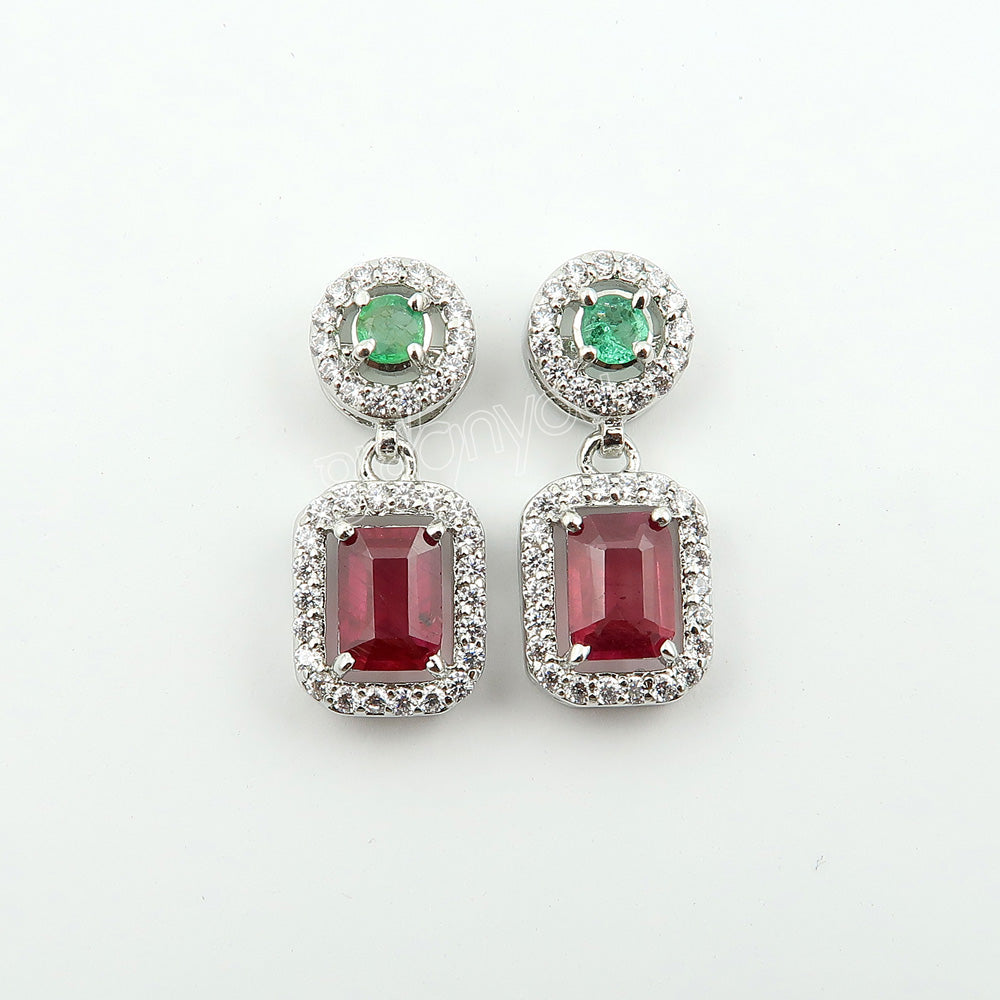
A gemstone isn't manufactured - it's grown, slowly, under pressure and heat conditions that occur naturally underground. Quartz is common enough to turn up almost anywhere on the planet. Other minerals need a rarer set of conditions to crystallise at all, which is part of why some stones cost more than others. But rarity isn't really what hooks most buyers. It's the fact that no two rough stones, even cut from the same vein, come out looking identical. A ring set with a natural stone carries little inconsistencies that a lab-grown or synthetic piece simply won't have, and in a place like Brighton, where people already gravitate toward handmade and slightly imperfect things, that quality is treated as a feature rather than a flaw.
Smoky Quartz Earrings for Daily Wear
If you're after something that works with almost anything in your wardrobe, smoky quartz tends to come up a lot. Smoky Quartz Earrings suit most skin tones thanks to that soft grey-brown colour, and the stone itself holds up well to daily knocks - you're not babying it the way you might with something softer. It reads as dressed-up without tipping into "special occasion only," which is probably why local jewellers keep it in stock year-round rather than pulling it out just for wedding season.
Rhodochrosite and Its Odd, Banded Look
Rhodochrosite gets attention for a different reason - it's visually strange in a good way. The pink and white banding running through the stone never repeats the same pattern twice, so Rhodochrosite Jewellery ends up genuinely one-of-a-kind piece to piece. Some traditions associate the stone with warmth or compassion, though honestly, most buyers I've come across pick it simply because it looks unlike anything else in the case, not because of any folklore attached to it.
What Gemstone Jewellery Brighton Studios Actually Offer
Most studios operating under the Gemstone Jewellery Brighton umbrella do a lot more than sell finished pieces off a shelf. Quite a few will sit down with you for a proper consultation - you pick a stone, rough or polished, and talk through setting options with the goldsmith directly, rather than choosing from a fixed catalogue. Resizing and repair work is common too, since settings loosen or wear down over years of use. Some shops also do stone identification and appraisal, which comes in handy if you've inherited a piece and have no idea what's actually set into it. A handful even run small evening classes on wire-wrapping or basic stone-setting, which has quietly built up a community of hobbyists who now buy loose stones just to practise on.
Why Sourcing Ethics Keep Coming Up in Conversation
It's not unusual for a customer to ask outright where a stone was mined before they'll even consider buying it. People want to know the supply chain avoids conflict zones, and whether the people who actually dug the stone out of the ground were paid something fair for it. Decent jewellers usually have an answer ready - documentation, a certified supplier, something beyond a shrug. This matters because unregulated gemstone mining can do real damage, both environmentally and to the people working the mines. Brighton's shoppers, on the whole, tend to reward businesses that are upfront about this rather than vague or evasive.
Role Local Craftsmanship Plays
A lot of the goldsmiths and silversmiths working around the city set stones by hand, which takes longer than casting in a factory but gives far more control over how the finished piece turns out. Customers can ask for tweaks partway through - move a stone slightly, adjust the band width - something that's basically impossible with imported stock that arrives already finished. This also changes how sourcing works at a smaller scale. A jeweller might come back from a single buying trip with a dozen interesting stones rather than ordering a thousand identical units from a catalogue. The market that results feels less driven by trend cycles and more shaped by whatever a particular maker happened to find interesting that month.
Picking the Right Stone for What You Actually Need
Three things matter most: hardness, colour, and how often you'll actually wear the piece. Harder stones survive daily wear better than softer ones, which might be worth saving for occasions rather than everyday use. Colour also shifts depending on the metal it's set in - warm gold changes how a stone reads compared to cooler silver. It's usually worth just asking a jeweller directly about durability and upkeep rather than trusting an online listing, since photos and screen lighting can make a stone look nothing like it does in person.
Conclusion
Brighton's appetite for gemstone jewellery isn't really a trend so much as a fit - the city already leans toward independent makers, honest sourcing, and things that don't look mass-produced, and stones tick all three boxes without trying. Whether it's the understated grey of smoky quartz or the strange pink banding of rhodochrosite, each piece carries something a factory line can't replicate. Gemstone Jewellery Brighton keeps growing mostly through word of mouth rather than advertising, and that's probably the clearest sign the interest is genuine rather than manufactured.
Frequently Asked Questions (FAQs)
Que. What actually sets gemstone jewellery apart from ordinary fashion jewellery?
Ans. It comes down to the material. Gemstones are natural or treated minerals with their own colour variation and structure, whereas fashion jewellery typically relies on synthetic materials or plated metal that looks identical piece to piece.
Que. Can gemstones handle being worn every day?
Ans. Some can, some can't. Harder minerals like quartz cope fine with daily wear, but softer stones are better saved for occasional use to avoid scratching or chipping.
Que. How do I know if a gemstone was sourced ethically?
Ans. Just ask. A reputable jeweller should be able to tell you where the stone was mined and point to certification or documentation if you push for it.
Que. Do gemstone pieces need different care than regular metal jewellery?
Ans. Generally yes - avoid harsh chemicals and big temperature swings, and stick to a soft cloth for cleaning unless the jeweller specifically confirms an ultrasonic cleaner is safe for that stone.
Que. Can a jeweller set a stone I already own into something new?
Ans. Most studios offering bespoke work will do exactly that. Bring in an inherited or previously bought stone and a goldsmith can set it into a new design.